
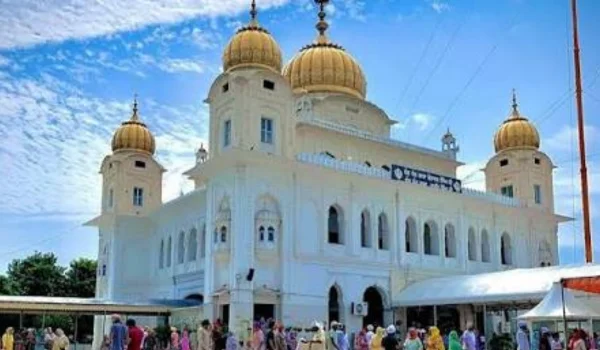
Sirhind Gurudwara is commonly used to refer to the historic Sikh pilgrimage sites around Sirhind and Fatehgarh Sahib in Punjab. The most important shrine in this area is Gurudwara Sri Fatehgarh Sahib, located in Fatehgarh Sahib district.
Gurudwara Shri Fatehgarh Sahib is dedicated to the memory of Sahibzada Zorawar Singh Ji and Sahibzada Fateh Singh Ji, the younger sons of Guru Gobind Singh Ji, and is closely associated with the martyrdom of the two Sahibzadas and Mata Gujri Ji. The Punjab government identifies the site as one of the district’s major religious attractions.
The Sirhind-Fatehgarh Sahib area has several historic gurdwaras connected with this period of Sikh history, including Gurudwara Bhora Sahib, Gurudwara Burj Mata Gujri, Gurudwara Shahid Ganj and Gurudwara Jyoti Sarup Sahib.
Quick Information
| Detail | Information |
| Popular reference | Sirhind Gurudwara |
| Main historic shrine | Gurudwara Sri Fatehgarh Sahib |
| Location | Fatehgarh Sahib, Punjab |
| Historic region | Sirhind |
| Associated with | Guru Gobind Singh Ji, Mata Gujri Ji and the younger Sahibzadas |
| Religion | Sikhism |
| Entry fee | Free |
| Langar | Available as part of gurdwara tradition |
| Current public listing | Main gurdwara generally open from around 3:00 AM to 11:00 PM; Sunday listed 24 hours |
| Nearest major railway station | Sirhind Junction |
| Nearest airport | Chandigarh/Mohali International Airport |
| Road connectivity | Good road connectivity through Sirhind and Fatehgarh Sahib |
The current public listing gives the main Fatehgarh Sahib gurdwara hours as approximately 3:00 AM–11:00 PM on most days, with Sunday listed as 24 hours. These are general listing hours rather than a detailed timetable of every religious programme.
History of Sirhind and Fatehgarh Sahib
Sirhind has a long history predating the Sikh period and became an important town under different medieval and Mughal rulers. The Punjab government notes that Sirhind was an important historical town and later came under the Mughal Empire.
Its importance in Sikh history is particularly associated with the events involving Guru Gobind Singh Ji’s family during the period following the evacuation of Anandpur Sahib.
After Guru Gobind Singh Ji and his family were separated while crossing the swollen Sirsa River, Mata Gujri Ji and the two younger Sahibzadas were eventually taken to Sirhind. According to the Punjab government’s historical account, they were held at Thanda Burj and the Sahibzadas were subsequently executed after refusing to abandon their faith.
The present-day Fatehgarh Sahib complex commemorates these events.
Gurudwara Sri Fatehgarh Sahib
The principal shrine is Gurudwara Sri Fatehgarh Sahib.
The Punjab government describes it as a memorial to the martyrdom of the younger sons of Guru Gobind Singh Ji. The complex includes the historic Bhora Sahib, which preserves the location associated with the wall where the Sahibzadas were confined and martyred.
The Government of India tourism portal also identifies the gurdwara as a major site commemorating the martyrdom of Sahibzada Zorawar Singh Ji and Sahibzada Fateh Singh Ji.
Sahibzada Zorawar Singh Ji and Sahibzada Fateh Singh Ji
The younger Sahibzadas were the sons of Guru Gobind Singh Ji.
The two young Sahibzadas were brought before the authorities of Sirhind and were subjected to pressure to change their faith. Sikh historical tradition records that they refused.
The Punjab government states that they were bricked alive in 1704 by Wazir Khan, the then Fauzdar of Sirhind. Their martyrdom is commemorated at Gurudwara Fatehgarh Sahib.
Their courage and steadfastness have made Fatehgarh Sahib one of the most significant pilgrimage destinations associated with Sikh history.
Mata Gujri Ji
Mata Gujri Ji, the grandmother of the younger Sahibzadas, is also central to the history of Fatehgarh Sahib.
After the Sahibzadas were martyred, Mata Gujri Ji died at Sirhind. The historic Burj Mata Gujri is located near the main Fatehgarh Sahib complex and commemorates her connection with these events.
For visitors, the nearby shrines provide a way to understand the events of the period rather than seeing Fatehgarh Sahib as only one standalone gurdwara.
Gurudwara Bhora Sahib
Gurudwara Bhora Sahib is part of the Fatehgarh Sahib complex.
The Punjab government states that the historic wall associated with the martyrdom of the younger Sahibzadas has been preserved at this location. The sanctuary containing the wall is known as Bhora Sahib.
This makes Bhora Sahib one of the most historically important sections of the pilgrimage complex.
Gurudwara Burj Mata Gujri
Another important shrine is Gurudwara Burj Mata Gujri.
It commemorates the place associated with the confinement of Mata Gujri Ji and the younger Sahibzadas before their martyrdom. It is located close to the main Fatehgarh Sahib gurdwara.
Visitors can include it in the same pilgrimage circuit.
Gurudwara Jyoti Sarup Sahib
Gurudwara Shri Jyoti Saroop Sahib (Sarhind) is another major historic shrine in the Fatehgarh Sahib area.
The Punjab government states that Gurudwara Jyoti Sarup stands at the place where the mortal remains of Mata Gujri Ji and Sahibzada Zorawar Singh Ji and Sahibzada Fateh Singh Ji were cremated.
The traditional account also remembers Seth Todar Mal, a devotee of Guru Gobind Singh Ji, in connection with obtaining land for the cremation.
Gurudwara Shahid Ganj
Gurudwara Shahid Ganj is another historic shrine near the main Fatehgarh Sahib complex.
The Punjab government specifically lists Shahid Ganj among the historic gurdwaras located around Fatehgarh Sahib.
The wider Sirhind-Fatehgarh Sahib area therefore has several connected sites, allowing visitors to follow the history through multiple locations.
Religious Importance
Sirhind-Fatehgarh Sahib holds an important place in Sikh history because of the martyrdom of the younger Sahibzadas and Mata Gujri Ji.
The pilgrimage circuit is associated with:
- Guru Gobind Singh Ji
- Sahibzada Zorawar Singh Ji
- Sahibzada Fateh Singh Ji
- Mata Gujri Ji
- The historical events at Sirhind
- Sikh principles of faith and steadfastness
- Seva and langar
- Remembrance of Sikh martyrs
The district itself was officially named Fatehgarh Sahib in 1992, deriving its name from Sahibzada Fateh Singh Ji.
Langar at Sirhind Gurudwara
Guru Ka Langar is an important part of Sikh gurdwara tradition.
At the Fatehgarh Sahib pilgrimage complex, langar and community-service arrangements support devotees visiting the historic shrines. During major religious gatherings, these facilities serve large numbers of pilgrims.
Visitors can participate in langar and contribute to seva according to the arrangements of the gurdwara.
Exact daily langar serving times are not consistently published as a separate official timetable, so visitors planning their journey around meals should confirm locally.
Timings of Sirhind Gurudwara
The current public listing for the main Gurudwara Sri Fatehgarh Sahib shows:
Approximately 3:00 AM to 11:00 PM on most days, with Sunday listed as 24 hours.
| Information | Details |
| General opening | Around 3:00 AM |
| General closing | Around 11:00 PM |
| Sunday | Listed as 24 hours |
| Entry fee | Free |
| Religious programmes | Separate schedules may apply |
| Langar | Available according to local arrangements |
Because prayer, kirtan and special programmes can have different timings, visitors attending a particular event should check the current schedule.
Shaheedi Jor Mela
One of the most important annual gatherings at Fatehgarh Sahib is the Shaheedi Jor Mela, held in December to commemorate the martyrdom of the younger Sahibzadas and Mata Gujri Ji.
The Punjab government states that the annual event is organised during 11–13 Poh and attracts thousands of pilgrims.
During the event, the area becomes significantly busier than on ordinary days. Visitors should expect larger crowds and possible changes to traffic, parking and local transport arrangements.
SGPC also organises religious programmes and Nagar Kirtans connected with the commemoration.
How to Reach Sirhind Gurudwara
By Road
Fatehgarh Sahib is well connected by road.
The Punjab government states that the National Highway route through Sirhind and Mandi Gobindgarh provides road access to the district, and buses travelling on the Delhi-Amritsar corridor serve the area.
From Sirhind, visitors can continue towards Fatehgarh Sahib by local road transport, taxi or private vehicle.
By Train
Sirhind Junction Railway Station is the main railway option for visitors.
The district administration identifies Sirhind Junction on the Delhi-Amritsar railway section and notes that several trains halt there. There is also a railway station at Fatehgarh Sahib on the Sirhind-Nangal line.
From the station, taxis and local transport can be used for the onward journey.
By Air
The nearest major airport is Chandigarh International Airport/Mohali Airport.
The Punjab government gives the distance from the airport to Fatehgarh Sahib at approximately 50 km.
Visitors can continue from the airport by taxi or other road transport.
Nearby Places to Visit
The Sirhind-Fatehgarh Sahib area has several historic and religious attractions.
Gurudwara Jyoti Sarup Sahib
Important shrine associated with the cremation of Mata Gujri Ji and the younger Sahibzadas.
Thanda Burj
The historic Thanda Burj is associated with the confinement of Mata Gujri Ji and the younger Sahibzadas. It is part of the wider Fatehgarh Sahib heritage circuit.
Rauza Sharif
Rauza Sharif is a historic Islamic religious site near Fatehgarh Sahib. The district government lists it among the area’s important tourist places.
Aam Khas Bagh
The historic Aam Khas Bagh near Sirhind is another important heritage attraction associated with the Mughal period.
Sanghol Museum
The district also has Sanghol Museum, associated with the archaeological heritage of the region.
Gurdwara Etiquette
Visitors should follow standard Sikh religious etiquette:
- Cover your head before entering the Darbar Sahib.
- Remove footwear at the designated place.
- Wear clean and modest clothes.
- Maintain silence during Gurbani and kirtan.
- Sit respectfully in the congregation.
- Do not point your feet towards Guru Granth Sahib Ji.
- Follow the instructions of sevadars.
- Keep the premises clean.
- Participate respectfully in langar.
- Avoid smoking, alcohol and tobacco on the premises.
- Follow crowd and security instructions during major gatherings.
Visitor Tips
- Allow several hours if you want to visit the complete Fatehgarh Sahib circuit.
- Sirhind and Fatehgarh Sahib are closely connected historically, but the main Fatehgarh Sahib gurdwara is in Fatehgarh Sahib.
- Check programme timings before travelling for a specific diwan or Gurpurab.
- Expect heavy crowds during the December Shaheedi Jor Mela.
- Use Sirhind Junction for convenient railway access.
- Carry a head covering.
- Wear comfortable clothing and footwear.
- Keep some additional travel time during major religious events.
- Follow local parking and traffic instructions.
Frequently Asked Questions
Which Gurudwara is known as Sirhind Gurudwara?
“Sirhind Gurudwara” is a commonly used informal reference to the historic Sikh shrines around Sirhind-Fatehgarh Sahib. The principal shrine is Gurudwara Sri Fatehgarh Sahib.
Why is Fatehgarh Sahib famous?
Fatehgarh Sahib is famous for its association with the martyrdom of Sahibzada Zorawar Singh Ji, Sahibzada Fateh Singh Ji and Mata Gujri Ji.
Which Sahibzadas were martyred at Sirhind?
The younger Sahibzadas of Guru Gobind Singh Ji, Sahibzada Zorawar Singh Ji and Sahibzada Fateh Singh Ji, were martyred at Sirhind.
What is Gurudwara Jyoti Sarup Sahib known for?
Gurudwara Jyoti Sarup Sahib marks the site associated with the cremation of Mata Gujri Ji and the two younger Sahibzadas.
What are the timings of Fatehgarh Sahib Gurudwara?
The current public listing gives general hours of approximately 3:00 AM–11:00 PM, while Sunday is listed as 24 hours. Specific religious programmes can have separate timings.
Is langar available?
Yes. Langar is an important part of Sikh gurdwara practice and is available through the pilgrimage complex according to local arrangements.
How can I reach Sirhind Gurudwara by train?
Sirhind Junction Railway Station is the main railway station serving the area. Fatehgarh Sahib also has a railway station on the Sirhind-Nangal line.
When is Shaheedi Jor Mela held?
The annual Shaheedi Jor Mela is held in December, around 11–13 Poh, to commemorate the martyrdom of the younger Sahibzadas and Mata Gujri Ji.
Can visitors of other religions visit the gurdwara?
Yes. Visitors from all backgrounds can visit a gurdwara, provided they respect Sikh religious practices, dress appropriately and follow the instructions of the gurdwara management.
Conclusion
Sirhind Gurudwara is best understood as part of the historic Sirhind-Fatehgarh Sahib Sikh pilgrimage circuit, with Gurudwara Sri Fatehgarh Sahib as its principal shrine. The area commemorates the martyrdom of Sahibzada Zorawar Singh Ji, Sahibzada Fateh Singh Ji and Mata Gujri Ji and contains several closely connected historic gurdwaras.
For visitors, a trip should ideally include the main Fatehgarh Sahib complex along with Bhora Sahib, Burj Mata Gujri, Shahid Ganj and Jyoti Sarup Sahib. The area is accessible by road and rail, with Sirhind Junction serving as the main railway connection.