
Situated in Sri Muktsar Sahib, Punjab, Gurudwara Tibbi Sahib is one of the important historical Sikh shrines associated with Sri Guru Gobind Singh Ji and the famous Battle of Muktsar, also known as the Battle of Khidrana, fought in 1705. The gurdwara stands on a sandy mound, or tibbi, from where Guru Gobind Singh Ji is traditionally believed to have observed the battlefield and showered arrows on the advancing Mughal forces.
The shrine forms an important part of the group of historic gurdwaras in Sri Muktsar Sahib connected with Guru Gobind Singh Ji and the Forty Liberated Ones (Chali Mukte).
Quick Information
| Detail | Information |
| Name | Gurudwara Tibbi Sahib |
| Location | Sri Muktsar Sahib, Punjab |
| Historical Association | Sri Guru Gobind Singh Ji |
| Major Event | Battle of Muktsar / Battle of Khidrana |
| Historical Significance | Site of the sandy mound used by Guru Gobind Singh Ji during the battle |
| Initial Shrine | 18th century |
| Reconstructed | 1843 |
| Present Structure | Developed during the 1950s |
| Entry Fee | Free |
| Langar | Available |
| Best Time | October–March |
| Major Religious Occasion | Maghi |
| Nearby Gurdwara | Rakab Sar Sahib, about 200 m away |
Note: There are several gurdwaras named Tibbi Sahib in Punjab, including historic shrines at Jaito, Behbal Kalan and the Rupnagar/Kiratpur Sahib region. This article refers specifically to Gurudwara Tibbi Sahib in Sri Muktsar Sahib, the shrine associated with Guru Gobind Singh Ji and the Battle of Muktsar.
History of Gurudwara Tibbi Sahib
The history of Gurudwara Tibbi Sahib is closely connected with the final major battle fought by Guru Gobind Singh Ji against the Mughal forces.
In 1705, Guru Gobind Singh Ji and his Sikhs reached the area then known as Khidrana di Dhab. A group of forty Sikhs who had earlier left the Guru returned under the leadership of Bhai Mahan Singh and, with the encouragement of Mai Bhago, fought against the pursuing Mughal army. Their sacrifice later earned them the revered title of Chali Mukte, or Forty Liberated Ones.
During the battle, Guru Gobind Singh Ji positioned himself on a nearby sandy elevation. From this strategic point, known as a tibbi, Guru Sahib could observe the movement of the opposing forces and participate in the battle by firing arrows.
The location subsequently became associated with the name Gurudwara Tibbi Sahib. The Government of Punjab identifies the shrine as marking the sandy mound from which Guru Gobind Singh Ji showered arrows on the enemy during the battle.
Religious Significance
Gurudwara Tibbi Sahib is particularly significant because of its connection with Guru Gobind Singh Ji’s leadership during the Battle of Muktsar.
The site reminds devotees of the courage and sacrifice of the Sikh warriors who fought in the battle. It is also closely connected with the story of the Forty Mukte, whose sacrifice is commemorated throughout the Sikh tradition.
Sri Muktsar Sahib itself is one of the important historical centres of Sikhism, and Tibbi Sahib is among several gurdwaras in the city associated with Guru Gobind Singh Ji’s 1705 campaign.
Architecture of Gurudwara Tibbi Sahib
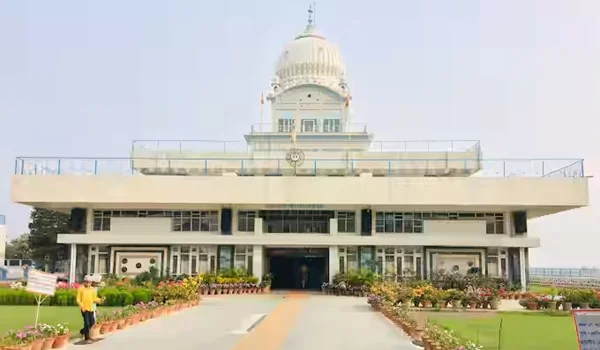
The present Gurudwara Tibbi Sahib stands on the historic sandy mound associated with the battle.
According to the Government of Punjab, the shrine was initially established as a modest structure in the 18th century. It was reconstructed in 1843 by Sodhi Man Singh of Mansinghvala. The present building was developed during the 1950s under the supervision of Baba Baghel Singh, a follower of Sant Gurmukh Singh.
The present structure consists of a square hall with the sanctum located at its centre. A square pavilion rises above the sanctum and is topped by a lotus-shaped dome, while decorative marble kiosks are positioned at the corners.
The walls and dome are covered with white marble, while the surrounding floor is also marble-covered, giving the shrine a distinctive and dignified appearance.
Gurudwara Tibbi Sahib Timings
Gurudwara Tibbi Sahib is generally accessible to devotees throughout the day. However, detailed official information about fixed daily opening and closing hours is not consistently published online.
For regular visitors, it is advisable to visit during morning or evening prayer hours. Timings and religious programmes may vary during major occasions.
The shrine becomes particularly busy during Maghi, when large numbers of devotees visit Sri Muktsar Sahib for the annual religious gatherings.
Langar at Gurudwara Tibbi Sahib
The tradition of Guru Ka Langar is an important part of Sikh religious life. Devotees visiting the historic gurdwaras of Sri Muktsar Sahib can participate in community meals and seva.
Langar reflects the Sikh principles of:
- Equality
- Sharing
- Selfless service
- Community participation
- Humility
Visitors can also participate in seva, depending on the arrangements at the gurdwara.
During major religious gatherings, especially around Maghi, the number of devotees visiting Sri Muktsar Sahib increases significantly and community food services operate on a much larger scale.
Entry Fee and Visitor Rules
There is no entry fee for visiting Gurudwara Tibbi Sahib.
Visitors should follow standard gurdwara etiquette:
- Cover your head before entering.
- Remove your shoes at the designated place.
- Wear clean and modest clothing.
- Do not carry tobacco or alcohol inside.
- Maintain silence and discipline during Gurbani and ardas.
- Keep the premises clean.
- Sit respectfully in the prayer area.
- Follow instructions given by sewadars.
The gurdwara is a place of worship, so visitors should maintain religious decorum throughout their visit.
Facilities at Gurudwara Tibbi Sahib
As part of the historic gurdwara network of Sri Muktsar Sahib, Tibbi Sahib benefits from the facilities and pilgrimage infrastructure available in the city.
Visitors can generally find facilities such as:
- Prayer and darshan area
- Langar/community kitchen
- Drinking water
- Shoe-storage facilities
- Seva arrangements
- Parking in the surrounding area
- Access to other historic gurdwaras nearby
Because Tibbi Sahib is close to other important Sikh shrines, visitors can conveniently cover several historical sites during the same pilgrimage.
How to Reach Gurudwara Tibbi Sahib
By Road:
Sri Muktsar Sahib is well connected by road with major cities of Punjab. Visitors can reach the city by bus, taxi or private vehicle and then use local transport to reach the gurdwara.
By Train:
Sri Muktsar Sahib has a railway station with connections to different parts of Punjab. From the railway station, visitors can take an auto-rickshaw, taxi or local transport.
By Bus:
The city is connected by bus with Bathinda, Faridkot, Kotkapura, Ferozepur and other nearby cities.
By Air:
For visitors travelling by air, airports serving the wider region include Sri Guru Ram Dass Jee International Airport, Amritsar, and Chandigarh International Airport, although the onward journey to Muktsar is by road.
Best Time to Visit
The cooler months from October to March are generally comfortable for visiting Sri Muktsar Sahib and exploring its historic gurdwaras.
For devotees interested in Sikh history, Maghi Mela in January is one of the most significant periods to visit. Sri Muktsar Sahib hosts a major annual religious gathering during Maghi, attracting devotees from Punjab and other parts of India.
However, visitors should expect very large crowds during this period.
Nearby Historical Gurudwaras
One of the major advantages of visiting Gurudwara Tibbi Sahib is its proximity to several other historic gurdwaras connected with Guru Gobind Singh Ji and the Battle of Muktsar.
Important nearby shrines include:
- Gurudwara Tuti Gandi Sahib
- Gurudwara Rakab Sar Sahib
- Gurudwara Tambu Sahib
- Gurudwara Shahid Ganj Sahib
- Gurudwara Datan Sar Sahib
Gurudwara Rakab Sar Sahib is approximately 200 metres east of Tibbi Sahib and is traditionally associated with the point where the stirrup (rakab) of Guru Gobind Singh Ji’s horse broke.
Why Visit Gurudwara Tibbi Sahib?
Gurudwara Tibbi Sahib is more than a place of worship—it is an important historical landmark connected with Guru Gobind Singh Ji and the Battle of Muktsar.
Standing on the historic tibbi, visitors can learn about the courage of Guru Sahib and the sacrifices made by the Sikh warriors who fought in the battle. Together with the nearby historic gurdwaras, Tibbi Sahib forms an important pilgrimage circuit in Sri Muktsar Sahib.
For anyone interested in Sikh history, Guru Gobind Singh Ji’s life and the story of the Chali Mukte, a visit to Tibbi Sahib can be particularly meaningful.
 admin