
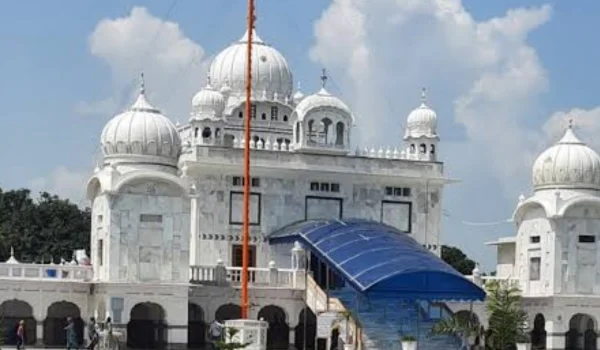
Gurudwara Guru Ka Bagh is a historic Sikh shrine located at Ghukewali (also spelled Ghukkevali), in Amritsar district, Punjab. It is situated around 20 km from Amritsar and is associated with the visits of Guru Arjan Dev Ji, the Fifth Sikh Guru, and Guru Tegh Bahadur Ji, the Ninth Sikh Guru.
The gurdwara is especially significant because the Guru Ka Bagh Morcha of 1922, one of the major episodes of the Sikh Gurdwara Reform Movement, took place here. The peaceful agitation concerned Sikh rights over the land attached to the gurdwara and the use of its wood for the community kitchen.
Gurudwara Guru Ka Bagh is the historic shrine at Ghukeywali covered in this article.
Important: There are other gurdwaras named Guru Ka Bagh in Punjab and other parts of India. This article specifically covers the historic Guru Ka Bagh at Ghukewali near Amritsar, associated with the 1922 Guru Ka Bagh Morcha.
Quick Information
| Detail | Information |
| Name | Gurudwara Guru Ka Bagh |
| Location | Ghukewali/Ghukeywali, Amritsar district, Punjab |
| PIN code | 143102 |
| District | Amritsar |
| Associated Gurus | Guru Arjan Dev Ji and Guru Tegh Bahadur Ji |
| Important historical event | Guru Ka Bagh Morcha, 1922 |
| Entry fee | No entry fee |
| Langar | Community langar tradition |
| Public listing hours | 24 hours |
| Nearest major city | Amritsar |
| Road access | Via the Amritsar-Ajnala side |
The current public business listing shows the gurdwara as open 24 hours. However, individual prayer, kirtan and langar schedules can vary, so visitors attending a specific programme should confirm locally.
History of Gurudwara Guru Ka Bagh
The history of Guru Ka Bagh goes back several centuries. The site is traditionally associated with the visit of Guru Arjan Dev Ji in 1585. A second important association is with Guru Tegh Bahadur Ji, who visited the area in 1664.
The site eventually became known as Guru Ka Bagh, meaning “the Guru’s garden”. Traditions surrounding the shrine connect the garden with Guru Tegh Bahadur Ji’s visit and the planting or development of a garden at the site.
There are two historic gurdwaras in the wider Ghukewali area associated with these visits. This is one reason why descriptions of Guru Ka Bagh can sometimes appear slightly different in historical and online sources.
Guru Arjan Dev Ji’s Connection
According to the historical tradition associated with the shrine, Guru Arjan Dev Ji visited the site in 1585.
The visit is an important part of the religious history of Guru Ka Bagh and connects the place with the period of the Fifth Sikh Guru. The shrine is therefore not simply known for its later 1922 struggle; it has a much older religious history.
Guru Tegh Bahadur Ji’s Connection
The site is also associated with Guru Tegh Bahadur Ji, who visited the area in 1664.
Traditional accounts state that Guru Tegh Bahadur Ji stayed in the area for an extended period and meditated here. The place subsequently became associated with the name Guru Ka Bagh.
This association with both the Fifth and Ninth Sikh Gurus gives the site considerable importance in Sikh heritage.
Guru Ka Bagh Morcha of 1922
The most famous chapter in the modern history of the gurdwara is the Guru Ka Bagh Morcha, which took place in 1922 during the Sikh Gurdwara Reform Movement.
At that time, control of many historic Sikh shrines was being challenged as Sikhs sought management through reformed gurdwara institutions. At Guru Ka Bagh, the dispute centred on the land attached to the gurdwara and the cutting of wood from that land for langar, the community kitchen.
The SGPC’s historical account records that the agitation began on 8 August 1922. Sikh volunteers were arrested and subjected to police action. The protest continued, with large numbers of Sikhs participating and courting arrest. According to the SGPC, about 5,605 Sikhs, including 35 SGPC members, had been arrested by 17 November 1922.
The Government of India’s Azadi Ka Amrit Mahotsav history page also records the Guru Ka Bagh episode as an important part of the Gurdwara Reform Movement. It describes the peaceful resistance and severe police action against the Akali volunteers.
Why the Morcha is Important
The Guru Ka Bagh Morcha is remembered for the peaceful resistance and discipline of the Sikh volunteers.
The agitation became one of the significant episodes of the wider movement for Sikh control and reform of historic gurdwaras. The centenary of the Morcha was commemorated at the site in 2022, with the SGPC organising a major religious programme.
Religious Importance
Guru Ka Bagh is important for several reasons:
- It is associated with Guru Arjan Dev Ji.
- It is associated with Guru Tegh Bahadur Ji.
- The site preserves the memory of the Guru Ka Bagh Morcha of 1922.
- It represents an important chapter in the history of the Sikh Gurdwara Reform Movement.
- It continues to function as a place of Sikh worship and remembrance.
For visitors interested in Sikh history, the shrine provides a connection between the earlier Guru period and the major gurdwara reform movements of the early 20th century.
Langar at Gurudwara Guru Ka Bagh
Langar is an important part of Sikh religious practice. The dispute that led to the 1922 Morcha itself was connected with the use of wood from the gurdwara’s attached land for the community kitchen.
The principle behind langar is that food is served to everyone without discrimination. Visitors can respectfully participate in langar and, where permitted, contribute through seva.
The exact daily langar timings are not clearly published in an authoritative online timetable, so visitors planning around a meal service should confirm locally.
Timings
The current public listing for Gurudwara Guru Ka Bagh at Ghukeywali shows the gurdwara as open 24 hours.
| Visitor detail | Information |
| General access | 24 hours according to current public listing |
| Entry fee | Free |
| Prayer/kirtan timings | May vary |
| Langar timings | Confirm locally |
For a special Gurmat Samagam, Akhand Path, Gurpurab or anniversary programme, the schedule may be different.
Major Religious and Historical Programmes
Important Sikh religious occasions are observed at the gurdwara. The Guru Ka Bagh Morcha anniversary is particularly significant because of the shrine’s role in the 1922 movement.
The 100th anniversary of the Morcha was observed in 2022, with SGPC organising a main congregation at Gurdwara Guru Ka Bagh, Ghukewali.
On major occasions, visitors can expect larger congregations and special kirtan, religious discourses and langar arrangements.
How to Reach Gurudwara Guru Ka Bagh
By Road
Gurudwara Guru Ka Bagh is located at Ghukewali in Amritsar district, away from central Amritsar. Sources place the shrine at roughly 20 km from Amritsar.
Road travel is the most practical option for visitors coming from Amritsar. Private vehicles, taxis and other local transport can be used to reach Ghukewali.
From Amritsar
Visitors staying in Amritsar can travel towards the Ajnala side and continue towards Ghukewali. The exact route can depend on the starting point and current road conditions, so using live navigation on the day of travel is advisable.
By Train
Amritsar has major railway connectivity. Visitors arriving by train can reach Amritsar Junction and continue by road towards Ghukewali.
There is no need to assume that a railway station is immediately next to the gurdwara; the final part of the journey is by road.
By Air
Travellers arriving by air can use Sri Guru Ram Dass Jee International Airport, Amritsar, followed by road transport towards Ghukewali.
Gurdwara Etiquette
Visitors should follow standard gurdwara etiquette:
- Cover your head before entering the main prayer area.
- Remove your shoes where required.
- Wear clean and modest clothing.
- Wash your hands and feet where facilities are provided.
- Maintain silence during Gurbani and kirtan.
- Sit respectfully in the congregation.
- Do not point your feet towards the Guru Granth Sahib Ji.
- Follow the instructions of sevadars.
- Avoid photography where it is restricted.
- Keep the premises clean.
- Participate in langar respectfully.
People of all communities are welcome to visit a gurdwara, provided they respect its religious practices.
Nearby Places and Attractions
A visit to Guru Ka Bagh can be combined with sightseeing in the wider Amritsar region.
The city of Amritsar is home to several major Sikh heritage sites, including Sri Harmandir Sahib (Golden Temple) and Akal Takht Sahib. Visitors interested specifically in the Gurdwara Reform Movement may also wish to learn about other historic sites connected with the early 20th-century Sikh reform movement.
Because Guru Ka Bagh is outside central Amritsar, it is useful to plan the visit as part of a wider road itinerary rather than treating it as a walkable city-centre attraction.
Why Visit Gurudwara Guru Ka Bagh?
Gurudwara Guru Ka Bagh is particularly relevant for visitors interested in:
- Sikh history and heritage.
- The lives and travels of Guru Arjan Dev Ji and Guru Tegh Bahadur Ji.
- The Sikh Gurdwara Reform Movement.
- The Guru Ka Bagh Morcha of 1922.
- Sikh traditions of langar and seva.
- Historic religious sites around Amritsar.
The combination of its old Guru-period associations and its role in the 1922 Morcha makes the site historically distinctive.
Visitor Tips
- Plan your route before leaving Amritsar.
- Keep your head covered inside the gurdwara.
- Dress respectfully.
- Check the local programme if you want to attend a particular religious service.
- During major anniversaries and Gurpurabs, expect larger crowds.
- Do not rely solely on third-party online timings for a specific religious event.
- If participating in langar, follow the instructions of the sevadars.
- Keep sufficient time for darshan and learning about the site’s history.
Frequently Asked Questions
Where is Gurudwara Guru Ka Bagh located?
The historic gurdwara is located at Ghukewali/Ghukeywali in Amritsar district, Punjab, around 20 km from Amritsar.
Which Sikh Gurus are associated with Guru Ka Bagh?
The site is associated with Guru Arjan Dev Ji and Guru Tegh Bahadur Ji.
What is Guru Ka Bagh Morcha?
The Guru Ka Bagh Morcha of 1922 was a major peaceful Sikh agitation during the Gurdwara Reform Movement. It arose from a dispute over the land attached to the gurdwara and the use of its wood for langar.
When did the Guru Ka Bagh Morcha take place?
The SGPC records the beginning of the Morcha on 8 August 1922. The agitation and arrests continued for several months.
Is langar available at Gurudwara Guru Ka Bagh?
The gurdwara follows the Sikh tradition of langar and community service. Visitors should check locally for the day’s exact langar schedule.
What are the timings of Gurudwara Guru Ka Bagh?
The current public listing shows the gurdwara as open 24 hours. Religious programmes can have separate schedules.
Is there an entry fee?
No. Visitors do not generally pay an entry fee to enter a gurdwara.
Can non-Sikhs visit Gurudwara Guru Ka Bagh?
Yes. Visitors from all communities are welcome. They should follow the gurdwara’s rules concerning head covering, footwear, clothing and conduct.
Conclusion
Gurudwara Guru Ka Bagh at Ghukewali near Amritsar is an important historic Sikh shrine with connections to Guru Arjan Dev Ji and Guru Tegh Bahadur Ji. Its historical importance is further strengthened by the Guru Ka Bagh Morcha of 1922, a major episode in the Sikh Gurdwara Reform Movement.
For anyone exploring Sikh heritage around Amritsar, the gurdwara offers an opportunity to learn about both the earlier history of the Sikh Gurus and the later struggle for reform and management of historic Sikh shrines.