
Some of Amritsar’s most important Sikh sites are not defined by massive domes or grand courtyards, but by the history that took place within their walls. Gurudwara Guru Ke Mahal is one such sacred place. What began as a modest residential house became closely connected with several generations of Sikh Gurus and remains an important historical shrine in the old city of Amritsar.
The site is particularly significant because it is associated with Guru Ram Das Ji, Guru Arjan Dev Ji, Guru Hargobind Sahib Ji, Baba Atal Rai Ji and Guru Tegh Bahadur Ji. It is also traditionally remembered as the birthplace of Guru Tegh Bahadur Ji, the ninth Sikh Guru.
Located near Guru Bazaar and a short distance from Sri Harmandir Sahib (Golden Temple), Guru Ke Mahal is an important stop for pilgrims exploring the historic Sikh sites of Amritsar.
Quick Information
| Information | Details |
| Name | Gurudwara Guru Ke Mahal |
| Location | Guru Bazaar area, Amritsar, Punjab |
| Established | Original residence associated with Guru Ram Das Ji, 1573 |
| Main Association | Guru Ram Das Ji, Guru Arjan Dev Ji, Guru Hargobind Sahib Ji, Baba Atal Rai Ji & Guru Tegh Bahadur Ji |
| Special Significance | Traditional birthplace of Guru Tegh Bahadur Ji |
| Timings | 5:00 AM – 10:00 PM |
| Entry Fee | Free |
| Langar | Available; special langar on designated religious occasions |
| Nearest Railway Station | Amritsar Junction |
| Nearest Airport | Sri Guru Ram Dass Jee International Airport |
| Nearby Landmark | Golden Temple |
| Best Time | October to March; early morning for a quieter visit |
History of Gurudwara Guru Ke Mahal
The history of Guru Ke Mahal goes back to the foundation period of Amritsar.
According to the Government of India’s Incredible India portal, Guru Ram Das Ji constructed the original residence in 1573. Guru Ram Das Ji was the fourth Sikh Guru and is closely associated with the establishment and development of Amritsar, then known as Ramdaspur.
The original structure was a relatively simple dwelling rather than the large gurdwara complex seen at many famous Sikh pilgrimage sites today. Over time, the residence was expanded and became associated with successive Sikh Gurus and their families.
Guru Arjan Dev Ji, the fifth Sikh Guru, was married at this place and was also appointed as Guru here. The site is additionally associated with the birth of Baba Atal Rai Ji and Guru Tegh Bahadur Ji.
A Punjab and Sind Bank publication describing the shrine also identifies Guru Ke Mahal as a residential place of the Gurus and states that the original residence constructed by Guru Ram Das Ji was later expanded by Guru Arjan Dev Ji and Guru Hargobind Sahib Ji.
Religious Significance
Guru Ke Mahal has exceptional importance in Sikh history because several major events in the lives of the Gurus are associated with the site.
It is traditionally remembered as the birthplace of Guru Tegh Bahadur Ji, who later became the ninth Sikh Guru and is revered for his sacrifice for religious freedom and human dignity.
The site is also connected with Baba Atal Rai Ji, son of Guru Hargobind Sahib Ji.
The association with Guru Arjan Dev Ji is equally important. Historical accounts connect the place with his marriage and his appointment as the fifth Sikh Guru.
Because of these connections, Guru Ke Mahal is not simply a place for worship; it is also a place where visitors can understand important chapters of early Sikh history.
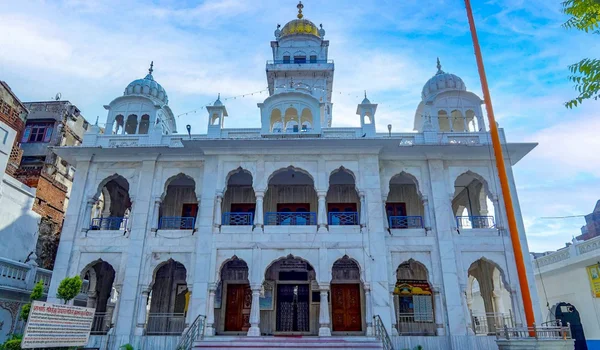
Architecture and Structure
Unlike the enormous scale of Sri Harmandir Sahib, Guru Ke Mahal retains the character of a historic residential structure.
The present shrine is generally described as a three-storey building. The different levels have served different devotional and congregational purposes.
The basement contains a quiet meditation space associated with the Gurus’ remembrance and meditation. The upper areas provide space for sangat and religious activities, while the sacred Guru Granth Sahib is enshrined within the shrine.
Its relatively intimate architecture is part of what makes Guru Ke Mahal different from many larger Sikh monuments in Amritsar.
Gurudwara Guru Ke Mahal Timings
According to the current Incredible India listing, Gurudwara Guru Ke Mahal is open from:
Opening Time: 5:00 AM
Closing Time: 10:00 PM
These timings are also commonly reported by travel references.
Religious programmes, kirtan and special occasions may follow different schedules, so visitors attending a particular event should confirm the day’s programme locally.
Langar at Guru Ke Mahal
Langar is an important part of the Sikh tradition, representing equality, service and community participation.
Guru Ke Mahal also hosts community food and religious gatherings. Incredible India notes that a special divan and langar are held on the first Sunday of every Bikrami month.
Special arrangements are also made during important Sikh occasions, particularly those associated with Guru Tegh Bahadur Ji.
Visitors who wish to participate in langar can also contribute through seva, such as helping with serving, preparation or cleaning.
Festivals and Religious Events
Guru Ke Mahal is particularly significant during celebrations associated with Guru Tegh Bahadur Ji.
The shrine observes his birth anniversary, traditionally connected with Baisakhi. Special kirtan, divan and langar programmes are held during important religious occasions.
The surrounding Golden Temple area also becomes particularly active during major Sikh festivals, making festival visits spiritually vibrant but considerably busier.
Entry Fee and Visitor Rules
There is generally no entry fee for visiting Gurudwara Guru Ke Mahal.
Visitors should follow standard gurdwara etiquette:
- Cover your head before entering.
- Remove your shoes.
- Wear clean and modest clothing.
- Do not consume alcohol, tobacco or intoxicating substances.
- Maintain silence and respect during prayers.
- Follow instructions from sewadars.
- Do not disturb devotees during religious ceremonies.
- Keep the premises clean.
People from all religions and backgrounds are welcome to visit a gurdwara.
Facilities at Guru Ke Mahal
Depending on current arrangements, visitors can expect facilities associated with a functioning historic gurdwara, including:
- Darbar Sahib
- Prayer and kirtan areas
- Langar/seva facilities
- Drinking water
- Shoe storage
- Washroom facilities
- Areas for sitting and meditation
- Religious gatherings
Because Guru Ke Mahal is situated within the dense old-city area, facilities and vehicle access are different from those at large modern complexes.
How to Reach Gurudwara Guru Ke Mahal
By Road
Guru Ke Mahal is located in the old city of Amritsar near Guru Bazaar and the Golden Temple area.
The shrine is located in a relatively congested market area, so large vehicles may not be able to reach directly to the entrance. Walking or using an e-rickshaw for the final section can be more convenient.
By Train
Amritsar Junction Railway Station is the main railway station serving the city.
Guru Ke Mahal is approximately 1.5 km from Amritsar Junction, according to travel information, although actual travel distance and route can vary depending on the starting point and road restrictions.
By Air
The nearest airport is Sri Guru Ram Dass Jee International Airport, Amritsar. Visitors can use taxis or app-based cabs to reach the old city.
Distance from Golden Temple
One of the biggest advantages of visiting Guru Ke Mahal is its proximity to Sri Harmandir Sahib (Golden Temple).
The shrine is located within the historic core of Amritsar and can be incorporated into a walking itinerary covering several important Sikh sites around the Golden Temple.
Nearby Places to Visit
After visiting Guru Ke Mahal, pilgrims and tourists can explore several important attractions in the surrounding area:
- Sri Harmandir Sahib (Golden Temple)
- Akal Takht Sahib
- Jallianwala Bagh
- Partition Museum
- Gurudwara Baba Atal Sahib
- Gurudwara Mata Kaulan Sahib
- Central Sikh Museum
- Guru Bazaar
- Durgiana Temple
- Maharaja Ranjit Singh Museum
The close concentration of historic sites makes the old city particularly suitable for a walking-based heritage and pilgrimage itinerary.
Best Time to Visit
The best time for a comfortable visit to Amritsar is generally October to March, when temperatures are more pleasant.
For a quieter experience at Guru Ke Mahal, early morning can be a good choice. Visitors interested in experiencing major Sikh celebrations can plan around Gurpurabs and Baisakhi, although these periods can be significantly more crowded.
If you want to combine Guru Ke Mahal with the Golden Temple and other nearby shrines, starting early in the day can help you avoid some of the busiest periods.
Why Visit Gurudwara Guru Ke Mahal?
Guru Ke Mahal is worth visiting because its importance lies deeply in Sikh history and the lives of the Gurus.
The main reasons to visit include:
- Historical residence associated with Sikh Gurus
- Traditional birthplace association with Guru Tegh Bahadur Ji
- Association with Baba Atal Rai Ji
- Connection with Guru Arjan Dev Ji
- Historic residential architecture
- Daily prayers and kirtan
- Langar and seva
- Proximity to the Golden Temple
- Opportunity to explore Amritsar’s old Sikh heritage
For history enthusiasts, the shrine offers something different from the monumental scale of the Golden Temple: it provides a closer look at the residential and family history of the early Sikh Gurus.
Conclusion
Gurudwara Guru Ke Mahal Amritsar is one of the city’s most historically significant Sikh shrines. From its beginnings as a residence built by Guru Ram Das Ji to its association with several successive Gurus, the site preserves an extraordinary connection with the formative period of Sikh history.
Its association with Guru Tegh Bahadur Ji’s birth, Guru Arjan Dev Ji and Baba Atal Rai Ji gives the shrine a special place among Amritsar’s religious landmarks.
For anyone visiting the Golden Temple, adding Guru Ke Mahal to the itinerary provides an opportunity to explore a quieter but exceptionally important chapter of Amritsar’s Sikh heritage.